
Cape House Snakes: Meet Mork and Mindy
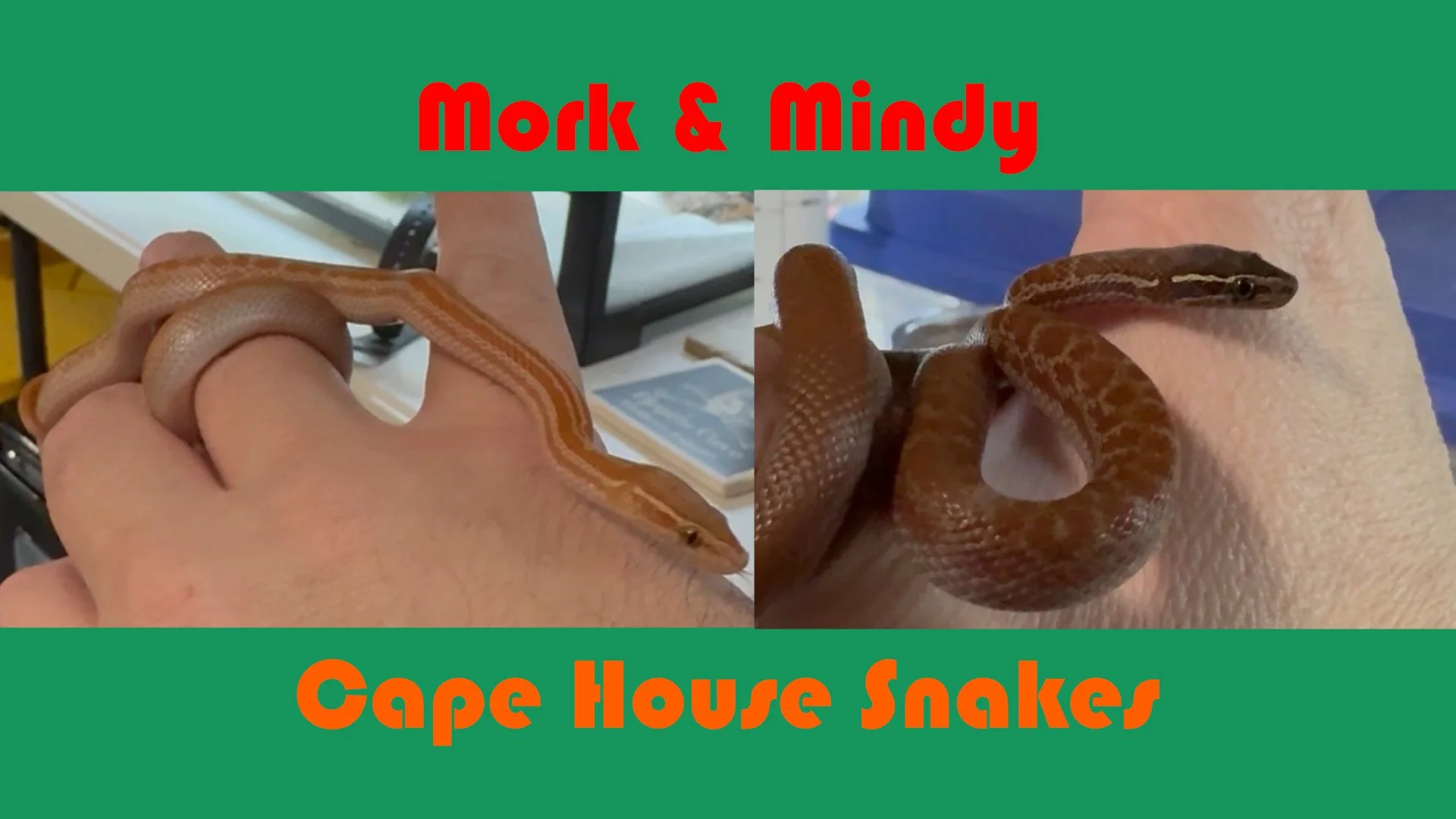
First, we owe everyone a small apology. We have not been nearly as active lately as we would like!
Dad became wrapped up in several other projects around the house, but those projects are finally complete. One of the biggest additions was a brand-new pool, so at least we have something fun to show for our little disappearance.
Now that life is settling back down, we are excited to properly introduce two fascinating members of the Kiley’s Kritters family: Mork and Mindy, our Cape house snakes!
Cape house snakes can make fascinating pets for reptile keepers looking for a manageable and curious snake with relatively straightforward care. They are still less familiar than corn snakes or ball pythons, which is part of what caught our attention.
How We Discovered Cape House Snakes
Our interest in Cape house snakes began after watching Clint from Clint’s Reptiles spend time with Warren Klein of Bushveld Reptiles.
Warren introduced Clint, and the rest of us watching, to the incredible species of house snakes. He explained their behavior, care, color variations, and what makes them such underrated reptiles.
You can watch the video that started it all here:
Clint Laidlaw sits with Warren Klein of Bushveld Reptiles and also chat’s with Garrett Hartle of Reah out Reptiles to learn all about House Snakes!
We were immediately intrigued. Cape house snakes were smaller and more manageable than many of the snakes we already keep, but they still had the sturdy build, inquisitive behavior, and relaxed handling style that we enjoy.
They seemed almost like miniature pythons, and we wanted to learn more.
That eventually led us directly to Warren and Bushveld Reptiles. Around the middle of November 2025, Mork and Mindy officially joined our family.
From South Africa to the United States
Warren grew up in South Africa, where reptiles were part of his life from an early age. His first pet snake was a Cape house snake that he found in his own backyard.
He later worked as a field guide in South African nature reserves. His reputation as the local “snake man” eventually led to a position as the curator of reptiles at a reptarium.
Warren later relocated to the United States and turned his lifelong passion for reptiles into Bushveld Reptiles. Cape house snakes remain an important part of his collection decades after that first backyard snake.
Receiving Mork and Mindy from someone with such a personal connection to the species made them especially meaningful additions to ours. Being a neighboring state resident Warren and Dad talked at length about the species and other various subjects including potential aquarium adventures if they ever make down our way!
You can read more about Warren’s story on the Bushveld Reptiles website.

Why We Named Them Mork and Mindy
Their names are an old-school television throwback. Yes Dad is old and showing his age. 99% of our audience was probably born post 90s!
Mork & Mindy was a classic sitcom that aired from 1978 to 1982. It starred Robin Williams as Mork, a wildly curious alien from the planet Ork, and Pam Dawber as Mindy, the human friend who helped him understand life on Earth.
The show began as a spin-off from Happy Days and helped launch Robin Williams into stardom. Mork was strange, energetic, curious, and endlessly entertaining. Mindy was usually the calmer and more grounded half of the pair.
When we needed names for our male-and-female house snakes, Mork and Mindy felt perfect. It was a fun old-school reference, the names sounded great together, and Mork’s curious alien personality seemed especially fitting for an unusual little snake that many people have never encountered. He has been way more inquisitive out of the gate as his future girlfriend Mindy who has been a bit on the shy and reserved side.
For everyone who remembers the show: Nanu Nanu!
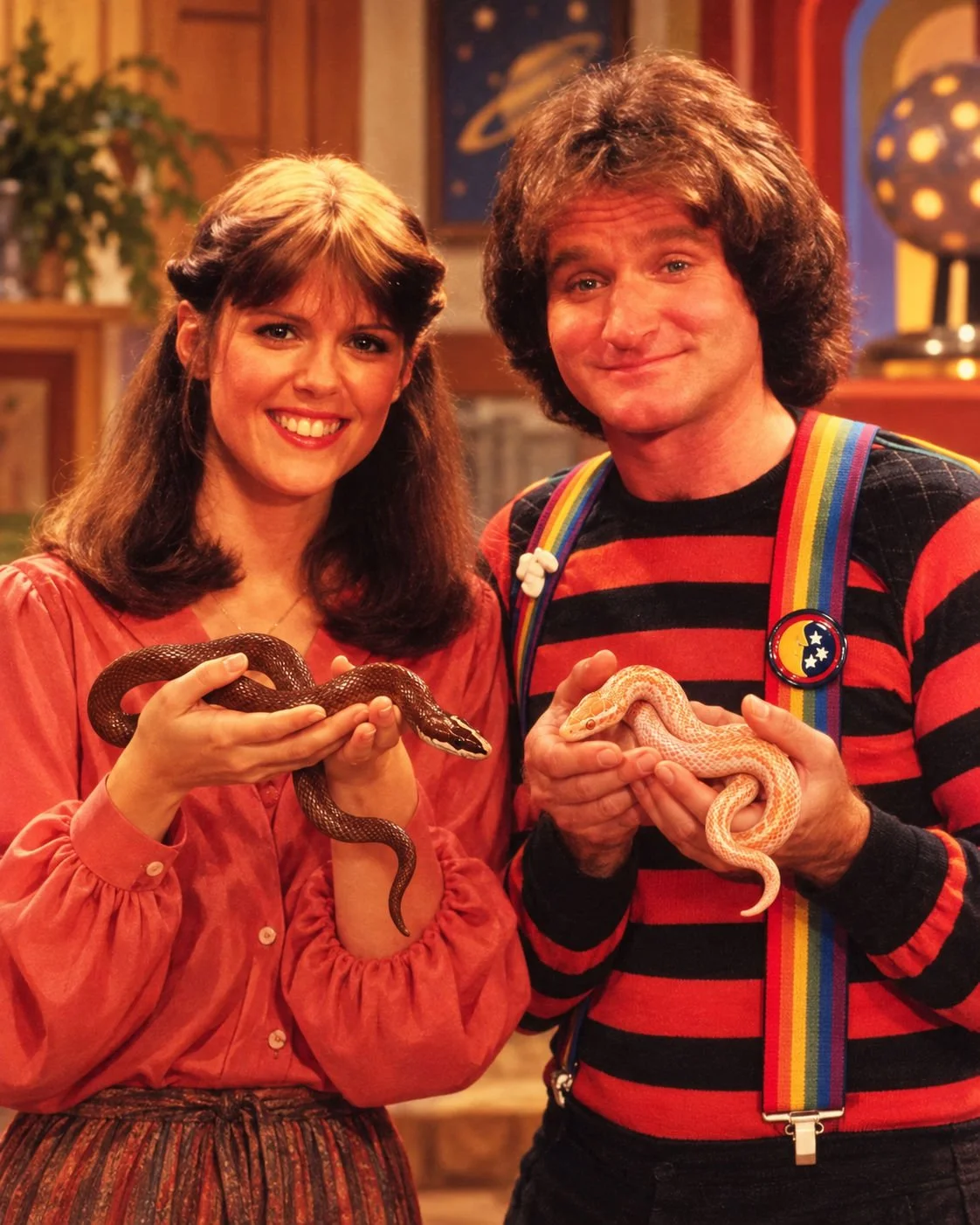
Little AI Magic Brings Robin Williams and Pam Dawber Cape House Snakes!
About Cape House Snakes
Cape house snakes, scientifically known as Boaedon capensis, are native to southern Africa. Their natural coloration can range from deep chocolate brown to rich brick red, depending on their locality.
Their markings can also vary. Different animals may display stripes, zigzags, or delicate lace-like patterns.
Selective breeding has produced an impressive variety of colors and traits, including T-positive and T-negative albinos, hypomelanistic snakes, blue-eyed animals, marbles, and several beautiful combinations. Warren’s very own line is striking, the Bushveld Albino!
Females are generally larger and more heavily built than males. Even as adults, Cape house snakes remain relatively manageable compared with many larger species.
Warren has an excellent overview of Cape house snake colors, localities, and morphs.
Quick Cape House Snake Facts
Scientific name: Boaedon capensis
Native range: Southern Africa
Diet: Appropriately sized mice
Cool-side temperature: Approximately 70 to 75°F
Warm-side temperature: Approximately 86 to 90°F
General humidity: Approximately 40 to 60 percent
Activity: Primarily terrestrial, but willing to climb
Temperament: Young snakes may be nervous but often become calm with patient handling
Important consideration: They are talented escape artists
Cape House Snake Care
Cape house snake care is fairly straightforward, but easy to care for should never be confused with care not mattering.
Housing
The enclosure must be extremely secure. House snakes can squeeze through surprisingly small openings, especially when they are young. A properly latched enclosure with no small gaps is essential. These little escape artists put Dad his paces, ensuring we had proper tubs that locked with binder clips to secure the lid to the sides all around!
They should have multiple snug hiding places. Foliage, cork bark, rocks, and branches can provide additional cover and enrichment. Although they are usually considered terrestrial snakes, house snakes will sometimes climb and perch when given the opportunity.
Temperature and Humidity
Cape house snakes need a temperature gradient so they can move between warmer and cooler areas.
Bushveld Reptiles recommends approximately 70 to 75°F on the cool side and 86 to 90°F on the warm side. General humidity should remain around 40 to 60 percent.
A humid hide can be offered if a snake needs extra moisture while shedding.
Feeding
Cape house snakes are typically enthusiastic eaters. Appropriately sized frozen-thawed mice offered about once a week are generally sufficient.
Prey size and feeding frequency should always be adjusted according to the snake’s age, size, and body condition. Their enthusiasm for food also means that keepers should be mindful of a possible feeding response when opening the enclosure.
For a more detailed husbandry overview, visit the Bushveld Reptiles House Snake Care Guide. They are experts and Warren basically lived amongst House Snakes growing up in South Africa!
Cape House Snake Temperament and Handling
Young house snakes can be quick and nervous, but many become calmer with patient and consistent handling.
Once settled, they are often described as handling like miniature pythons. They are sturdy, curious, and generally comfortable moving through your hands.
We approach handling calmly and support the snake’s body rather than restraining it. Early handling sessions should be short, especially while a snake is still learning that being picked up does not mean danger.
We also avoid handling immediately after feeding or while a snake is preparing to shed.
As with any reptile, the individual animal should set the pace. The goal is to gradually build trust through calm and predictable experiences.
An Underrated Pet Snake
Cape house snakes may not be as instantly recognizable as ball pythons, corn snakes, or boa constrictors, but they offer many of the qualities reptile keepers look for in a pet snake.
They are attractive, manageable, curious, active without being overwhelming, and available in an impressive range of colors and patterns.
We are grateful to Warren Klein and Bushveld Reptiles for allowing us to bring Mork and Mindy into the Kiley’s Kritters family. We are also grateful to Clint’s Reptiles for introducing us to a species we might otherwise have overlooked.
We will share more about Mork and Mindy as they continue to grow and show us who they are. With any luck we will breed the pair a few times and introduce some new babies to the Kiley’s Kritters universe!
Thank you for sticking with us during our quiet stretch. Now that Dad’s projects are finally finished, it is time to get back to the Kritters!
